
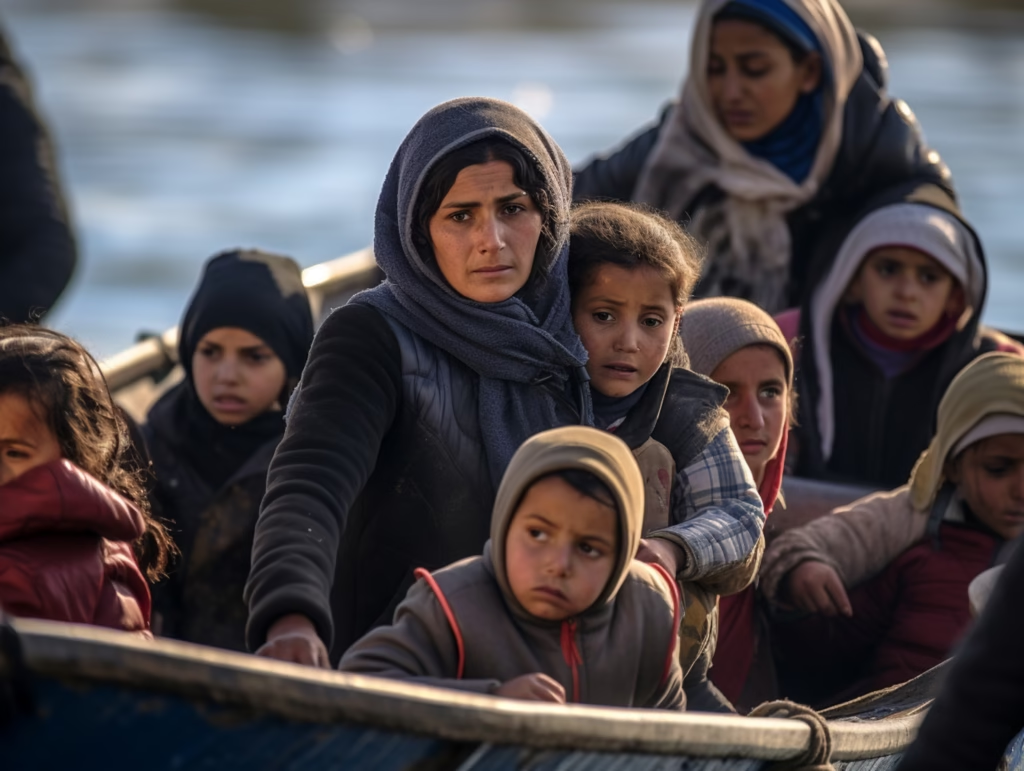
In a major step toward streamlining asylum procedures, the European Commission has officially released its first EU-wide list of “safe countries of origin.” This move aims to fast-track asylum processing and enhance cooperation with countries where migration flows to the EU are considered low-risk.
What Are “Safe Countries of Origin”?
A safe country of origin is defined as one where citizens are generally not at risk of persecution, war, or violence. Individuals from these nations are presumed to have less likelihood of qualifying for asylum in Europe.
The newly published list includes:
India
Georgia
Moldova
Armenia
Peru
Senegal
Serbia
While many EU member states have had their own national lists, this is the first time a standardized list has been introduced across the European Union.
What Does This Mean for Asylum Seekers?
Under the new rules, asylum applications from individuals coming from these countries will now:
Be processed more quickly under an accelerated procedure
Have a higher likelihood of rejection
Require the applicant to prove a serious individual risk to avoid deportation
This initiative is part of the EU’s broader effort to reduce asylum system backlogs, increase returns of unqualified applicants, and focus resources on more complex humanitarian cases.
Human Rights Groups Raise Concerns
While the EU emphasizes efficiency and fairness, several NGOs and legal experts warn that:
Individual risk factors may be overlooked
Vulnerable minorities within “safe” countries could face unjust deportations
Accelerated processes may undermine asylum seekers’ right to appeal
Why the EU Is Implementing This Now
The launch of this list comes ahead of the implementation of the EU Pact on Migration and Asylum, which is set to fully roll out by mid-2026. With asylum systems under pressure across Europe, especially following conflicts and rising migration, the Commission is looking to harmonize standards across member states and speed up decisions.
